Natural Room Freshener Spray
Using a Natural Room Freshener Spray is the most effective way to instantly refresh your living environment without relying on harsh, synthetic chemicals. A DIY Natural Room Freshener Spray allows you to harness the power of botanical extracts to eliminate stale odors at the source. Unlike store-bought aerosols, these natural alternatives improve indoor air quality while providing a sophisticated, layered scent profile. By customizing your blends, you can create a signature aroma that reflects your home’s personality. It is a cost-effective and eco-friendly solution for anyone who values a healthy, toxin-free household that smells as fresh as a spring garden.Natural Room Freshener At Home
Crafting a Natural Room Freshener At Home gives you complete control over the ingredients entering your personal space. When you develop a Natural Room Freshener At Home, you can skip the phthalates and artificial musks often found in commercial products. Popular methods include using baking soda bowls to absorb odors or simmering citrus and herbs on the stove. This personalized approach to home fragrance ensures your scents are unique and safe for sensitive individuals. It is an empowering way to manage your household’s sensory experience while prioritizing the long-term respiratory health of your family and beloved pets.Natural Air Freshener Spray Recipe
A reliable Natural Air Freshener Spray Recipe usually consists of three simple components: distilled water, a splash of witch hazel, and pure essential oils. Following a balanced Natural Air Freshener Spray Recipe ensures the fragrance is potent enough to mask kitchen or pet odors without being overwhelming. You can experiment with “Energy” blends like lemon and rosemary or “Relaxation” mixtures like lavender and cedarwood. This DIY method is not only fun but also significantly more sustainable than purchasing single-use plastic cans. It allows for endless creativity while keeping your home smelling crisp, clean, and entirely natural.Natural Room Deodorizer Spray
A high-quality Natural Room Deodorizer Spray does more than just hide smells; it actually neutralizes the airborne bacteria that cause them. Many effective Natural Room Deodorizer Spray formulas incorporate tea tree or eucalyptus oils, which possess natural antimicrobial properties. By targeting the molecules responsible for staleness, these sprays provide a deeper level of cleanliness in high-traffic areas like mudrooms or bathrooms. Switching to a botanical deodorizer ensures your home smells truly clean rather than just “covered up” by heavy perfumes. It is the perfect tool for maintaining a fresh, hygienic, and inviting atmosphere in every corner.Room Spray Vs. Air Freshener
When comparing Room Spray Vs. Air Freshener, the main difference lies in the delivery method and the duration of the scent. In the debate of Room Spray Vs. Air Freshener, room sprays are typically liquid-based and designed for immediate, targeted bursts of fragrance to refresh a specific area. Air fresheners often refer to continuous systems like plug-ins or gels that provide a constant background aroma. Natural room sprays offer the advantage of being “on-demand,” preventing an excessive buildup of scent in the air. Choosing the right format depends on whether you prefer a quick refresh or a permanent scent.
We’ve all been there. You walk into a room and poof the air feels heavy. Maybe it’s the lingering ghost of last night’s garlic shrimp, a damp dog, or just that “lived-in” staleness that comes with modern indoor life.
The instinctual move? Grab a brightly colored can from under the sink and spray a mist of “Ocean Breeze” or “Linen Fresh.” But lately, more of us are pausing mid-spritz. We’re looking at the long list of unpronounceable ingredients and wondering: Is there a better, cleaner way to make my home smell like a sanctuary?
If you’ve been searching for the best natural room freshener spray, you’re in the right place. Let’s dive into why nature usually knows best and how you can reclaim your home’s atmosphere without the chemical cocktail.
What is a Natural Room Freshener?
At its core, a natural room freshener is a substance derived from plant-based materials such as essential oils, botanical extracts, or minerals designed to improve the scent of an indoor environment. Unlike mass-market aerosols that rely on synthetic fragrance oils (often petroleum-based), a natural version uses the volatile organic compounds found in nature to alter the air.
The goal isn’t just to “cover up” a bad smell with a stronger, fake one. A true natural room deodorizer spray actually works to neutralize the odor molecules while adding a subtle, aromatherapeutic layer to the room.
Room Freshener Spray: Is it Good or Bad?

When people ask, “is room freshener good for health?” the answer depends entirely on what’s inside the bottle.
1. The Bad:
Traditional aerosols often contain VOCs (volatile organic compounds), formaldehyde, and phthalates. These can trigger migraines, exacerbate asthma, and cause respiratory irritation. If you’ve ever felt a “tickle” in your throat after spraying a generic air freshener, that’s your body reacting to the chemicals.
Traditional aerosols often contain VOCs (volatile organic compounds), formaldehyde, and phthalates. These can trigger migraines, exacerbate asthma, and cause respiratory irritation. If you’ve ever felt a “tickle” in your throat after spraying a generic air freshener, that’s your body reacting to the chemicals.
2. The Good:
Natural sprays, when formulated correctly, can actually be beneficial. For instance, a spray containing eucalyptus or peppermint can help clear the senses, while lavender can reduce stress levels.
Natural sprays, when formulated correctly, can actually be beneficial. For instance, a spray containing eucalyptus or peppermint can help clear the senses, while lavender can reduce stress levels.
So, is room freshener spray good or bad? If it’s a natural room freshener spray, it’s generally a healthy addition to your home. If it’s a chemical-heavy aerosol, it’s best kept on the store shelf.
Why Ditch the Synthetic Sprays?
Most conventional air fresheners don’t actually “clean” the air; they mask odors with heavy perfumes and use phthalates to make the scent linger. Phthalates are known endocrine disruptors, and for people with asthma or sensitive pets, those “fresh” scents can be a literal headache.
Natural room fresheners work differently. They use plant-based extracts to neutralize odors and provide aromatherapeutic benefits. You’re not just hiding the smell of the trash; you’re actually improving your environment. Furthermore, the propellant in many store-bought cans is butane or propane highly flammable gases you’re essentially pumping into your living room
Room Spray vs. Air Freshener: What's the Difference?
While we often use the terms interchangeably, there is a subtle distinction:
1. Air Fresheners:
Usually refers to automated systems, plug-ins, or continuous-release gels. They are designed to provide a constant baseline scent.
Usually refers to automated systems, plug-ins, or continuous-release gels. They are designed to provide a constant baseline scent.
2. Room Sprays:
These are “on-demand” products. You control exactly when and where the scent goes. A natural room freshener at home is typically a spray because it allows for immediate odor neutralization without saturating the house in scent 24/7.
These are “on-demand” products. You control exactly when and where the scent goes. A natural room freshener at home is typically a spray because it allows for immediate odor neutralization without saturating the house in scent 24/7.
How to Use Room Freshener Spray Effectively
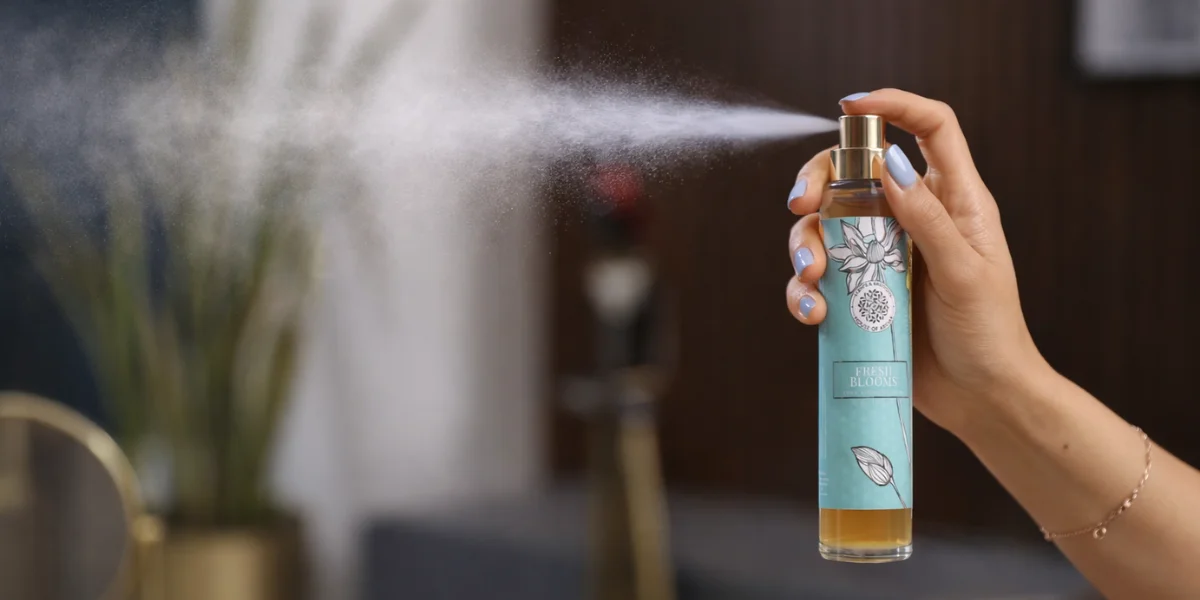
It sounds simple point and shootbut there is an art to it. To get the most out of your natural air freshener spray recipe, follow these tips:
1. Shake Well:
Because natural sprays don’t use chemical emulsifiers, the oils and water will separate. A quick shake ensures you’re spraying scent, not just plain water.
Because natural sprays don’t use chemical emulsifiers, the oils and water will separate. A quick shake ensures you’re spraying scent, not just plain water.
2. Mist High:
Spray toward the ceiling in the center of the room. This allows the mist to drift down through the air, catching odor molecules as it falls.
Spray toward the ceiling in the center of the room. This allows the mist to drift down through the air, catching odor molecules as it falls.
3. Target Fabrics:
For a longer-lasting scent, lightly mist curtains or upholstery. Natural oils cling to fibers better than they stay suspended in the air.
For a longer-lasting scent, lightly mist curtains or upholstery. Natural oils cling to fibers better than they stay suspended in the air.
4. Avoid Wood:
Pure essential oils can occasionally react with wood finishes, so keep the mist away from your antique dining table.
Pure essential oils can occasionally react with wood finishes, so keep the mist away from your antique dining table.
The DIY Solution: Natural Air Freshener Spray Recipe
Making a natural room freshener at home is surprisingly easy and significantly cheaper than buying premium eco-brands.
The "Golden Ratio" Recipe
1. 1/2 cup Distilled Water:
(Using distilled prevents mineral buildup in the nozzle).
(Using distilled prevents mineral buildup in the nozzle).
2. 2 tablespoons High-Proof Alcohol:
(Vodka or Rubbing Alcohol works best to “fix” the scent and help it evaporate).
(Vodka or Rubbing Alcohol works best to “fix” the scent and help it evaporate).
3. 25–30 drops Essential Oils:
(The fun part!)
(The fun part!)
Instructions:
1. Combine the alcohol and essential oils in a small glass spray bottle.
2. Swirl gently to mix (the alcohol breaks down the oil).
3. Add the distilled water.
4. Label your bottle and store it in a cool, dark place.
How to Use Essential Oil as Room Freshener
If you aren’t ready to mix a full spray, there are other ways to use essential oils as room fresheners.
1. The Cotton Ball Hack:
Place 2 drops of oil on a cotton ball and tuck it into your vacuum filter or at the bottom of a trash can.
Place 2 drops of oil on a cotton ball and tuck it into your vacuum filter or at the bottom of a trash can.
2. The Radiator Trick:
In winter, a single drop of pine or cinnamon oil on a ceramic radiator humidifier fills the whole house.
In winter, a single drop of pine or cinnamon oil on a ceramic radiator humidifier fills the whole house.
3. The Deodorizer:
Use a natural room deodorizer spray blend like lemon and tea tree oil directly on “stinky” spots like gym bags or shoe racks.
Use a natural room deodorizer spray blend like lemon and tea tree oil directly on “stinky” spots like gym bags or shoe racks.
Dealing with "Scent Overload"
What happens if you go overboard? Even natural scents can be overwhelming if you use too much. If you’re wondering how to get rid of room spray smell, the solution is simple:
1. Cross-Ventilation:
Open windows on opposite ends of the house to create a draft.
Open windows on opposite ends of the house to create a draft.
2. Baking Soda:
Place a bowl of dry baking soda in the center of the room; it acts like a magnet for airborne scent molecules.
Place a bowl of dry baking soda in the center of the room; it acts like a magnet for airborne scent molecules.
3. Activated Charcoal:
These bags are incredible at absorbing excess fragrance from the air.
These bags are incredible at absorbing excess fragrance from the air.
Top Scent Profiles for Your Home
Goal Best Oils to Use | Why it Works |
Odor Elimination | Lemon, Eucalyptus, Tea Tree These oils have natural antimicrobial properties. |
Stress Relief | Lavender, Bergamot, Ylang Ylang Proven to lower cortisol and induce relaxation. |
Focus/Energy | Peppermint, Rosemary, Grapefruit Stimulates the brain and improves mental clarity. |
Cozy Vibes | Cedarwood, Orange, Clove Creates a warm, grounded atmosphere. |
The Environmental Impact
When you choose a natural room freshener spray, you aren’t just protecting your lungs; you’re protecting the planet. Conventional aerosols contribute to ground-level ozone depletion. By reusing a glass spray bottle and filling it with biodegradable ingredients at home, you’re reducing plastic waste and keeping harsh chemicals out of our water systems.
Final Thoughts: Breathe Better Today
Transitioning to a natural room freshener at home is one of the easiest “low-tox” swaps you can make. It’s an immediate upgrade to your living space that costs pennies and provides actual health benefits. Whether you want to energize your morning with a citrus mist or wind down with a lavender natural room deodorizer spray, the power is in your hands and in the plants.
Stop masking your home’s personality with synthetic perfumes. Embrace the clean, crisp, and vibrant scents that nature intended.
FAQ's
Air fresheners are consumer products designed to mask or eliminate unpleasant odors and emit a pleasing fragrance. They come in various formats, including aerosol sprays, plug-ins, reed diffusers, gels, and scented candles. While some simply cover smells with heavy perfumes, modern high-quality air fresheners often contain active ingredients intended to neutralize odor molecules in the air or on surfaces.
Air fresheners work through four primary mechanisms:
- Masking: Overpowering bad smells with a stronger, more pleasant scent.
- Neutralizing: Using chemical agents (like cyclodextrin) to trap and deactivate odor molecules.
- Absorption: Using porous materials like activated charcoal or baking soda to soak up odors.
- Anesthetizing: Using compounds that temporarily dull the human sense of smell so the “stink” isn’t detected.
Generally, synthetic air fresheners are not considered “good” for health. Many contain phthalates (linked to hormonal issues) and Volatile Organic Compounds (VOCs) like formaldehyde and benzene, which can trigger asthma, allergies, and headaches. In 2026, health experts recommend choosing “VOC-free” or plant-based options and ensuring proper ventilation to maintain high indoor air quality.
The “best” natural option is Essential Oil Diffusion using an ultrasonic or nebulizing diffuser. It provides a pure, botanical scent without synthetic propellants. Other top-tier natural choices include:
- Stovetop Simmers: Boiling citrus peels, cinnamon sticks, and herbs in water.
- Activated Charcoal Bags: These are odorless but excellent for physically absorbing moisture and smells.
- DIY Vinegar Sprays: A mix of water, white vinegar, and essential oils is the best natural way to kill bacteria-based odors.
An air freshener primarily masks odors by adding a pleasant scent to the air, whereas an odor eliminator chemically traps or destroys foul-smelling molecules. While air fresheners often provide a continuous, passive fragrance through plug-ins or gels, room sprays offer an immediate, concentrated burst of scent for specific areas. Natural versions use botanical oils for better air quality, while synthetic options rely on chemicals for a longer-lasting, more intense aroma
You should exercise extreme caution. Babies have developing lungs that are more sensitive to VOCs, and many common essential oils (like tea tree, peppermint, and wintergreen) are toxic to cats and dogs. If you must use them, opt for pet-safe, 100% natural soy candles or water-based sprays, and always keep the area well-ventilated.