Natural wax vs regular wax candles: you’ve probably stood in a shop holding two jars that look almost the same, smell almost the same, and cost very differently. One says “soy” or “natural wax” on the label. The other says nothing at all about what’s inside.
So is the natural one really better, or is it just a nicer word on the box?
The short version is that the wax changes how a candle burns, how long it lasts, how much smoke you see and how the scent comes through. It doesn’t change everything, and a well-made regular candle can still beat a badly made natural one.
At House of Aroma, the natural scented candles are made with natural soy wax and natural beeswax, and each product page says so in plain words. That kind of clear label is exactly what this guide will teach you to look for.
Below, you’ll see what each wax is made from, how they compare on burn, smoke and scent, how to tell them apart when you shop, and how to look after a natural wax candle once you bring it home.
1. Natural Wax vs Regular Wax Candles: The Real Difference
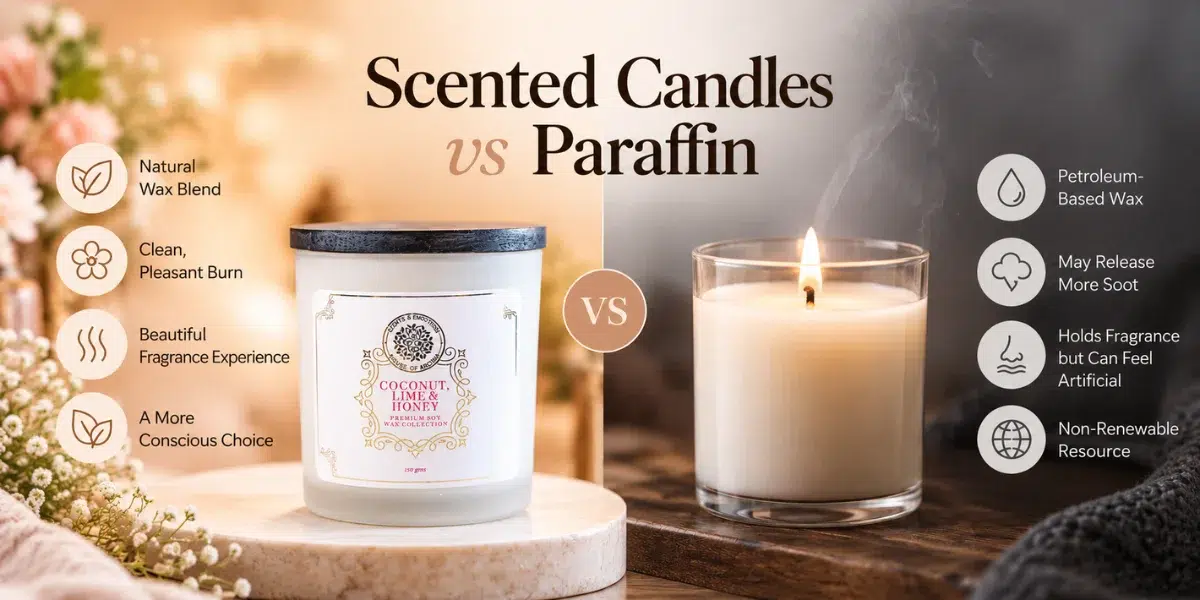
The real difference is where the wax comes from. Natural wax comes from plants or bees, like soy wax, coconut wax and beeswax. “Regular” wax usually means paraffin, which is made from petroleum during oil refining.
That one difference leads to others. Natural waxes tend to burn a little slower and softer. Paraffin tends to throw scent fast and strong, and it’s cheaper to make, which is why most low-priced candles use it.
| What you’ll notice | Natural wax (soy, beeswax, coconut) | Regular wax (usually paraffin) |
|---|---|---|
| Where it comes from | Plants or bees, renewable | Petroleum, a by-product of oil refining |
| Burn speed | Usually slower | Usually faster |
| Look of the wax | Creamy, soft, sometimes a little uneven on top | Smooth, glossy, often brightly coloured |
| Scent | Softer, steady throw | Strong, quick throw |
| Clean-up | Soy wax wipes off with warm soapy water | Harder to remove from fabric and glass |
If you’d like the deeper science on the two, this side-by-side on natural wax scented candles vs paraffin goes further into how each one is made.
What is regular candle wax?
In most shops, “regular” candle wax means paraffin, or a blend that’s mostly paraffin. It’s made from petroleum and is the cheapest wax to produce.
Are natural wax candles better than regular candles?
For many people, yes. They usually burn slower and come from renewable sources. But a well-made paraffin candle can still smell stronger, so “better” depends on what you want from it.
Is soy wax the same as natural wax?
Soy wax is one kind of natural wax. Beeswax, coconut wax and rapeseed wax are others. Many natural candles use a blend.
What wax does House of Aroma use in its natural candles?
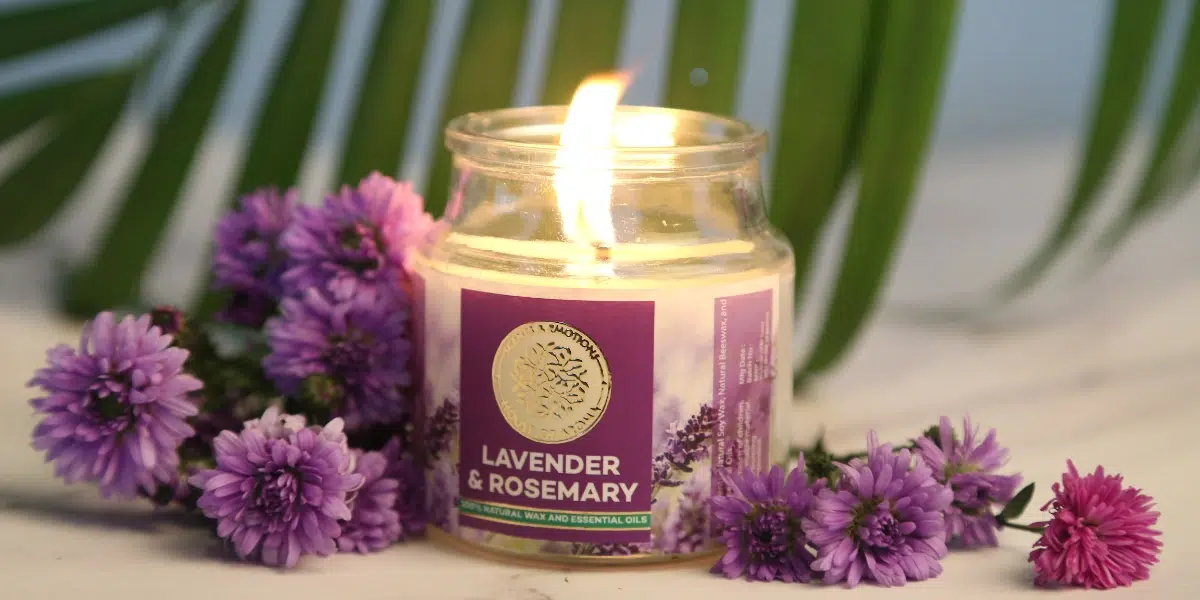
House of Aroma’s natural wax candles are made with natural soy wax and natural beeswax. Some, like the Lavender and Rosemary Natural Scented Candle, are scented with natural essential oils.
2. What Counts as Natural Wax?
Natural wax is any candle wax made from plants or bees rather than petroleum. The common ones are soy wax, beeswax, coconut wax and rapeseed wax.
Soy wax is made from soybean oil. It’s soft, creamy and holds fragrance well, which makes it a favourite for jar candles. There’s a full guide to soy wax candles if you want to go deeper.
Beeswax is made by honeybees. It’s harder than soy, burns slowly and has a faint honey smell of its own. Pure beeswax candles are lovely but pricey.
Coconut wax is very soft and smooth. It’s usually blended with other waxes because it’s too soft to hold its shape alone.
Why So Many Natural Candles Are Blends
Each natural wax has a weak spot. Soy can be a little soft and frosty on top. Beeswax is hard and costly. Blending them balances things out: a smoother top, a steadier burn and better scent.
That’s what House of Aroma does. The Lavender and Rosemary Natural Scented Candle, for example, is made with natural soy wax, natural beeswax and natural essential oils, according to its product page.
One honest warning: “blend” can also hide paraffin. A candle labelled “soy blend” may be mostly paraffin with a little soy. If the label doesn’t name every wax, ask.
Which natural wax is best for scented candles?
Soy and soy-beeswax blends are the most popular for scented jar candles. They hold fragrance well and burn evenly in a container.
Why is my soy candle a bit bumpy on top?
That’s normal for natural wax. It’s called frosting, and it doesn’t change how the candle smells or burns.
Does beeswax have its own smell?
Yes, a faint honey-like smell. In a scented blend you’ll barely notice it.
Does House of Aroma make candles with essential oils?
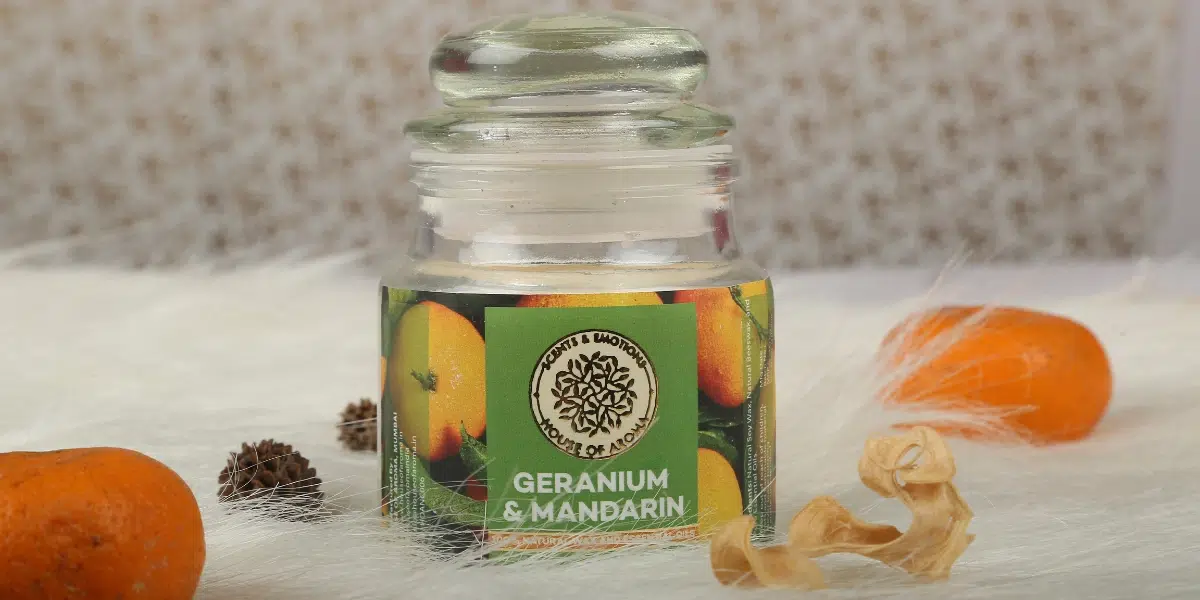
Yes. Its natural scented candle range, including Lavender and Rosemary, Lemongrass, Cinnamon and Geranium Mandarin, is made with natural wax and scented with essential oils or natural extracts.
3. What Is Regular Candle Wax Made Of?
Regular candle wax is usually paraffin, a white, odourless wax left over when crude oil is refined. It melts easily, takes colour brightly and carries scent well, which is why it’s been the standard candle wax for over a century.
Paraffin isn’t some villain. It’s cheap, reliable and easy to work with. The main reasons people move away from it are that it comes from fossil fuel and it tends to burn faster, so the candle doesn’t last as long.
You’ll also hear claims online that paraffin is “toxic”. The careful answer is that research on this is mixed, and how you burn a candle (short wick, no drafts, fresh air) matters more for smoke and soot than the wax alone.
A lot of candles in markets and malls are paraffin or paraffin blends with no wax listed at all. That’s usually your first clue.
Is paraffin wax bad for you?
There’s no clear proof that burning a paraffin candle the normal way is harmful. Trim the wick, avoid drafts and keep the room aired, whatever the wax.
Why are paraffin candles cheaper?
Paraffin is a by-product of oil refining, so there’s a lot of it and it’s cheap to make. Natural waxes cost more to grow and process.
Do paraffin candles make more soot?
They can, especially with a long wick or a draft. Any candle smokes if the wick is too long, so trimming matters a lot.
Does House of Aroma list the wax on its candle pages?
Yes. Its natural wax candles state the wax clearly in the product details and FAQs, for example natural soy wax and natural beeswax with fragrance oils in the Tuberose candle jar.
4. How They Burn and How Strongly They Smell
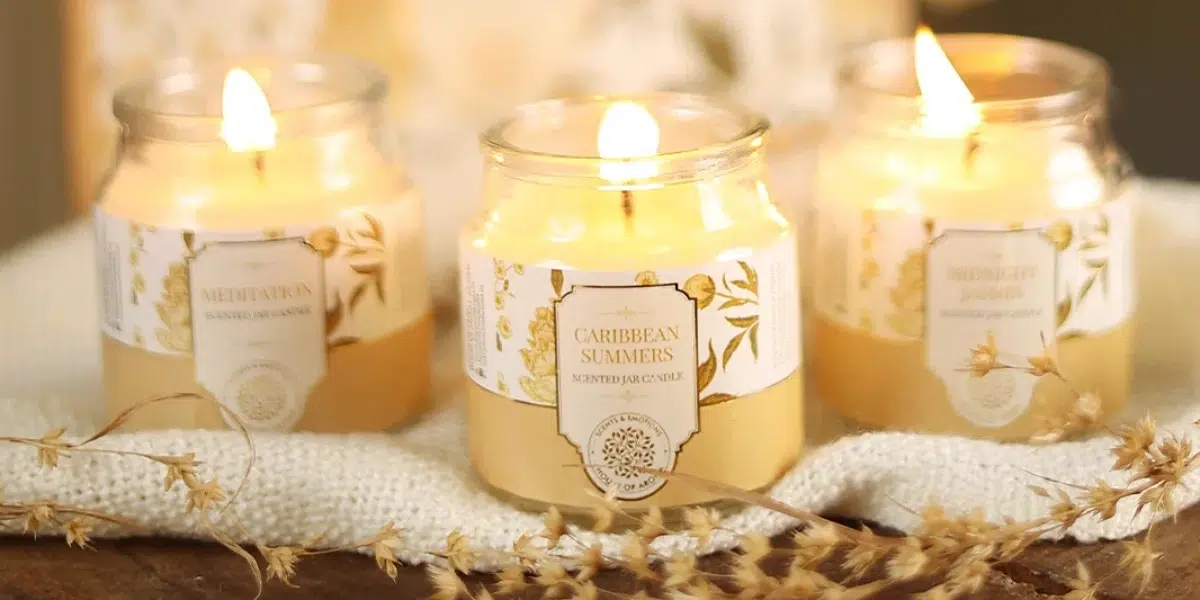
Natural wax usually burns slower and gives a softer, steadier scent. Paraffin usually burns faster and throws scent harder. Neither is wrong; it depends on the room and what you like.
Burn time: Natural wax tends to melt at a lower heat and burn more slowly, so a candle of the same size often lasts longer. House of Aroma’s Natural Wax Hawaiian Breeze 3 Wick Candle, for example, is listed at 400 g with up to 48 hours of burn time.
Smoke and soot: Natural wax candles are often described as cleaner burning. In practice, the biggest cause of black smoke is a long wick or a draft, so even a good candle smokes if you skip trimming.
Scent throw: Paraffin can fill a room fast. Natural wax is gentler at first but more even across the burn. In a big living room, a natural wax candle with more than one wick closes the gap nicely, which is why 3-wick candles are popular for larger spaces.
Sometimes a candle is too much, whatever the wax. In a small bedroom with the AC on and windows shut, a light floral natural candle is kinder than a heavy spice.
Whatever you burn, follow basic candle safety: never leave a lit candle alone, keep it away from curtains and anything that can catch, and keep it out of reach of children and pets.
Do natural wax candles last longer?
Usually, yes. Natural wax tends to burn slower than paraffin, so a candle of the same weight often lasts more hours.
Why does my natural candle smell weaker than a cheap one?
Paraffin throws scent fast and loud. Natural wax releases it more gently. Give it a full first burn and a closed door, and it usually fills the room well.
Why is my candle leaving black marks on the jar?
That’s soot, mostly from a wick that’s too long or a draft nearby. Trim the wick to about 5 mm before each burn and move the candle out of the breeze.
How long do House of Aroma’s natural wax candles burn?
It depends on the size. The 400 g Hawaiian Breeze 3 Wick Candle is listed at up to 48 hours and the Ocean 3 Wick Candle at up to 45 hours. Smaller jars burn for less time.
5. How to Tell Natural Wax vs Regular Wax Candles Apart When You Shop
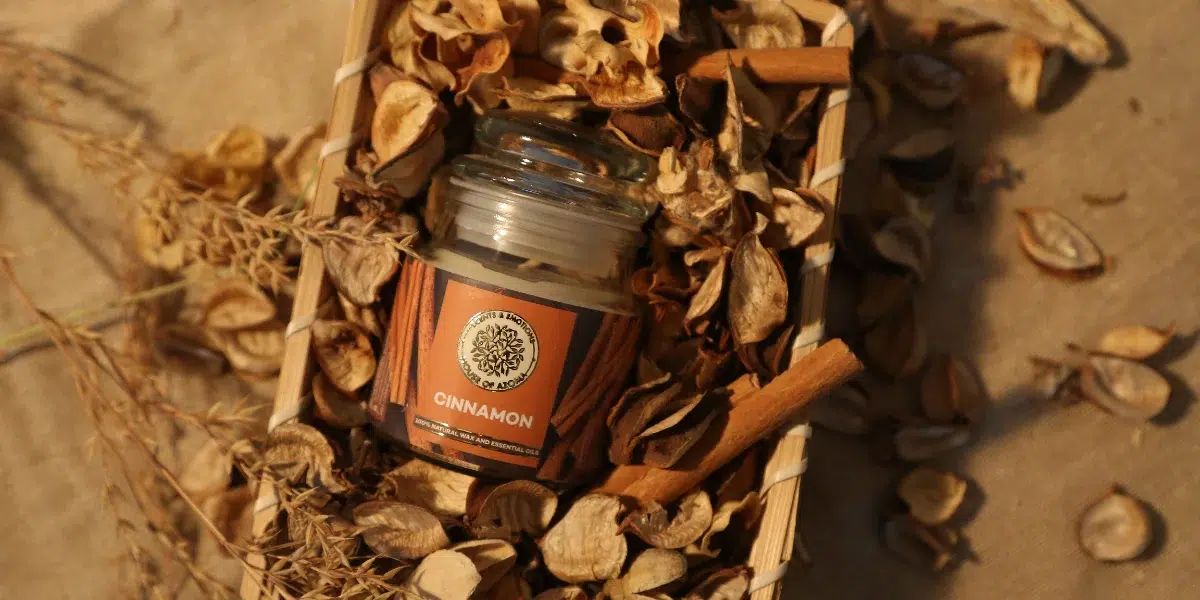
Read the label first. A natural wax candle names its wax, such as soy, beeswax or coconut. If the label only says “wax”, “scented wax” or nothing at all, it’s very likely paraffin or a paraffin blend.
A few other clues help:
- Look at the top. Natural wax is often creamy and slightly matte, sometimes with a little frosting. Paraffin is usually glossy and perfectly smooth.
- Check the colour. Very bright, deep colours are easier with paraffin. Natural wax candles are often white or soft-toned.
- Watch out for “blend”. “Soy blend” with no percentage can mean very little soy.
- Read the product page. Good brands list the wax, the weight and the burn time.
- Price. Natural wax costs more to make. A very cheap “soy” candle is worth a second look.
For example, the product page of House of Aroma’s Tuberose Natural Wax Scented Candle Jar lists natural soy wax, natural beeswax and fragrance oils, plus its 200 g weight and size. That’s the level of detail to expect.
Buying a gift? The label tells you a lot about how much care went into the candle, and the person opening it will notice too.
How can I tell if a candle is paraffin?
If the wax isn’t named, assume paraffin. A glossy, very smooth top and bright colour are also common signs.
Does “soy blend” mean natural?
Not always. Some soy blends are mostly paraffin. Look for a brand that names every wax in the blend.
Is a white candle always natural wax?
No. Paraffin can be white too. The label matters more than the colour.
How do I know a House of Aroma candle is natural wax?
Look for “natural wax” or “natural soy wax” in the product name, and “Natural Wax” in the product characteristics on the page. The Hawaiian Breeze 3 Wick Candle label, for example, reads 100% natural wax.
6. How to Care for Natural Wax Candles So They Last
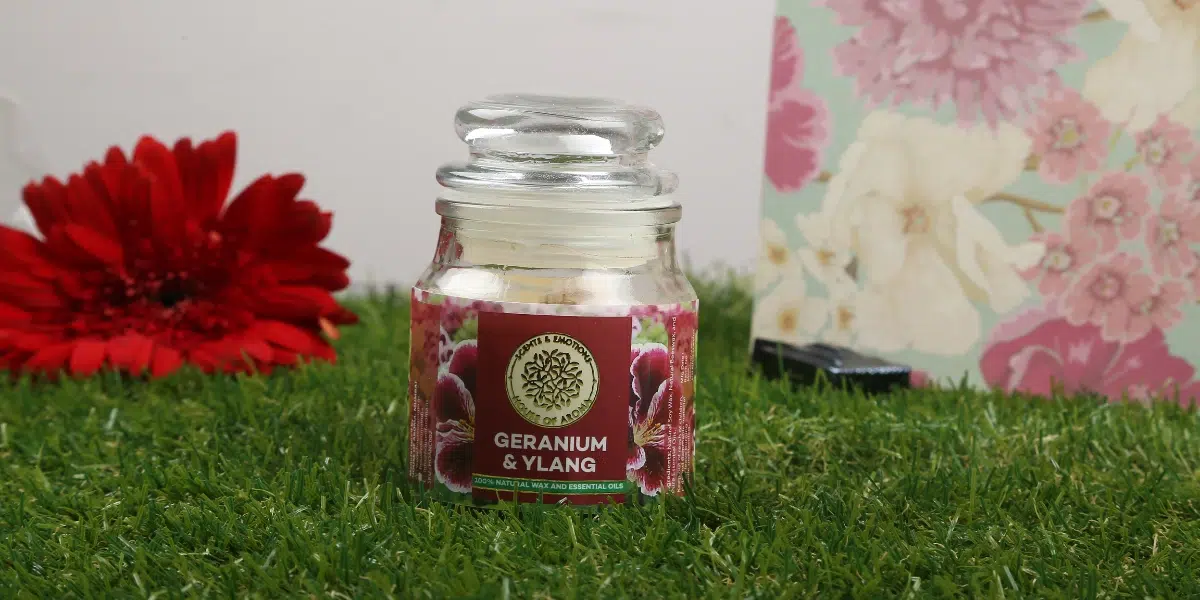
Let the first burn melt the whole top layer, trim the wick before each light, and burn for two to three hours at a time. Those three habits fix most problems people blame on the wax.
- First burn: Let the melted wax reach the edge of the jar, usually one to three hours. Stopping early causes tunnelling, where the candle burns a hole down the middle.
- Trim the wick: Keep it about 5 mm long. A long wick means a big flame, smoke and soot.
- Keep it out of drafts: Fans, AC vents and open windows make the flame flicker and smoke.
- Don’t burn it too long: Three to four hours is plenty in one go.
- Stop near the end: Put it out when about 1 cm of wax is left at the bottom.
- Put the lid on: Once it’s cool, cover it to keep dust out and the scent in.
In Mumbai’s humid months, store spare candles in a cool cupboard rather than a sunny shelf. Natural wax softens in heat. There’s more on wick care and storage in this candle care guide.
Why is my soy candle tunnelling?
The first burn was probably too short. Next time, let the melted wax reach the edges before you blow it out.
How often should I trim the wick?
Before every burn. Once the wax has cooled, trim it to about 5 mm.
Can I reuse the jar after the candle is done?
Yes. Scoop out the last bit of wax once it’s cool, wash the jar in warm soapy water and use it for cotton buds, pens or a small plant.
Does House of Aroma include care tips with its candles?
Yes. The product pages describe how the candles are made and how they burn, and the House of Aroma blog has a full candle care guide covering wicks, burn times and storage.
7. Why Choose House of Aroma for Natural Wax Candles?
At House of Aroma, a Mumbai-based fragrance manufacturer, the natural wax candles are hand poured in India and labelled clearly, with the wax, weight and scent notes on each page. You know what you’re lighting before it reaches your coffee table.
The range covers single-wick jars for a bedroom or pooja corner, home decor candles for a shelf, and natural wax 3-wick candles for the living room. Scents run from mogra and tuberose to woody leather and fresh ocean.
Find a candle that fits your space:
- Browse scented jar candles for bedrooms and small corners.
- Try the Natural Wax Hawaiian Breeze 3 Wick Candle for a bigger room.
- For something deep and warm, the Leather Home Decor Candle uses natural soy wax and natural beeswax.
Conclusion: Read the Label, Then Trust Your Nose
Natural wax vs regular wax candles comes down to this: natural wax is made from plants or bees and usually burns slower and softer, while regular wax is usually paraffin, which is cheaper and throws scent hard.
Both can make a room smell lovely. The difference shows up over time, in how long the candle lasts, how it looks as it burns and how you feel about what’s in it.
Check that the wax is named, give the first burn enough time and keep the wick trimmed. The rest is just picking a scent you love.
Common FAQs: Natural Wax vs Regular Wax Candles
Are natural wax candles worth the extra cost?
If you burn candles often, many people find they are. They usually last longer and come from renewable sources. For a candle you light twice a year, it matters less.
Are natural wax candles safe for pets?
Any lit candle needs care around pets. Keep it high, out of reach of tails and paws, and never leave it alone. Strong scents can also bother some animals, so keep the room aired.
Is soy wax or beeswax better?
Soy is softer and holds fragrance well. Beeswax is harder and burns very slowly. A blend of the two gives a bit of both.
Can natural wax candles have fragrance oils in them?
Yes. Many natural wax candles use fragrance oils for scent. The wax is natural; the scent may be natural, blended or both.
Why do natural wax candles cost more?
The raw wax costs more to grow and process, and natural blends take more care to pour well.
Do natural wax candles melt in Indian summers?
They can soften in a hot room or direct sun. Store them somewhere cool and shaded, and they’ll be fine.
Are House of Aroma candles hand poured?
Yes. House of Aroma says its natural wax 3-wick candles are hand poured in India by skilled artisans.
Which House of Aroma natural candles suit a pooja corner?
Soft florals are a gentle choice for a small prayer space. House of Aroma’s Mogra and Tuberose natural wax scented candle jars both carry classic Indian floral notes.