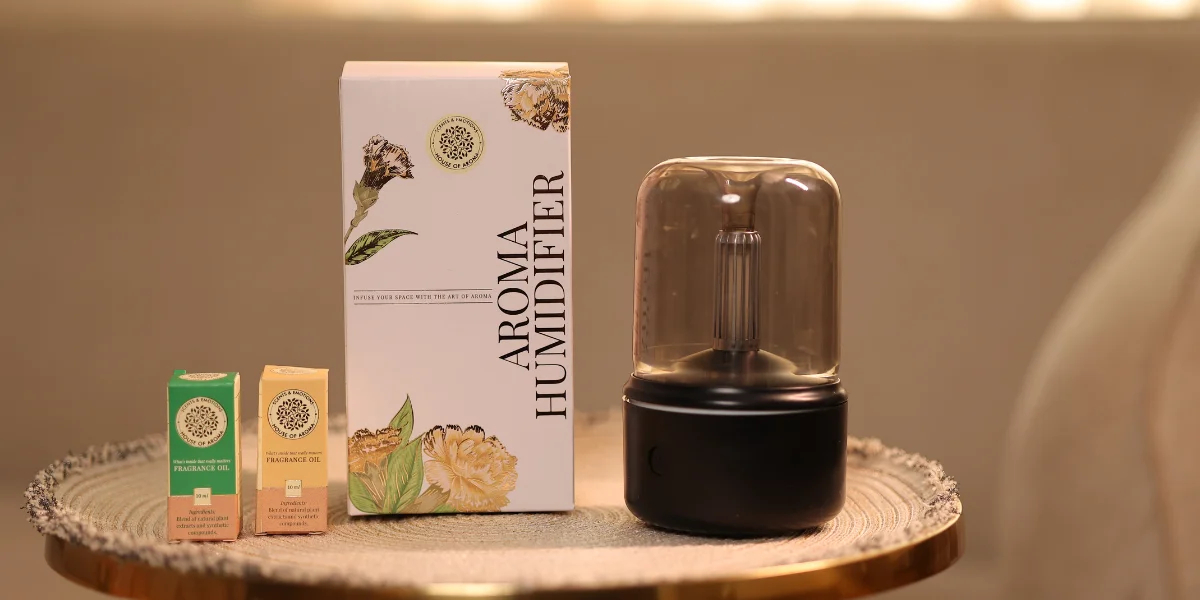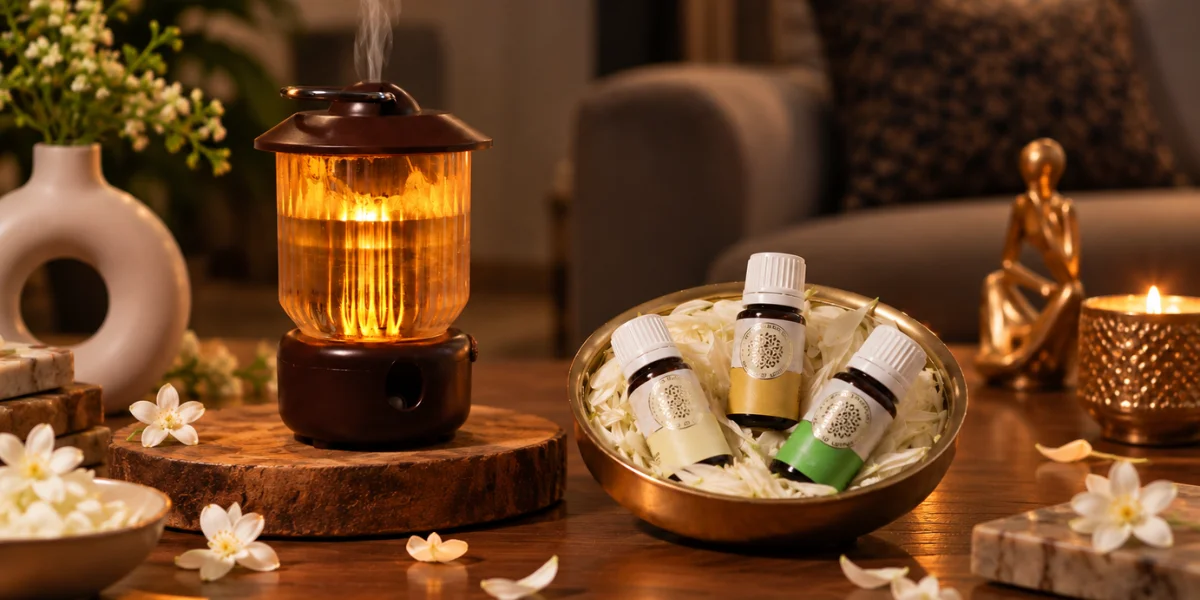
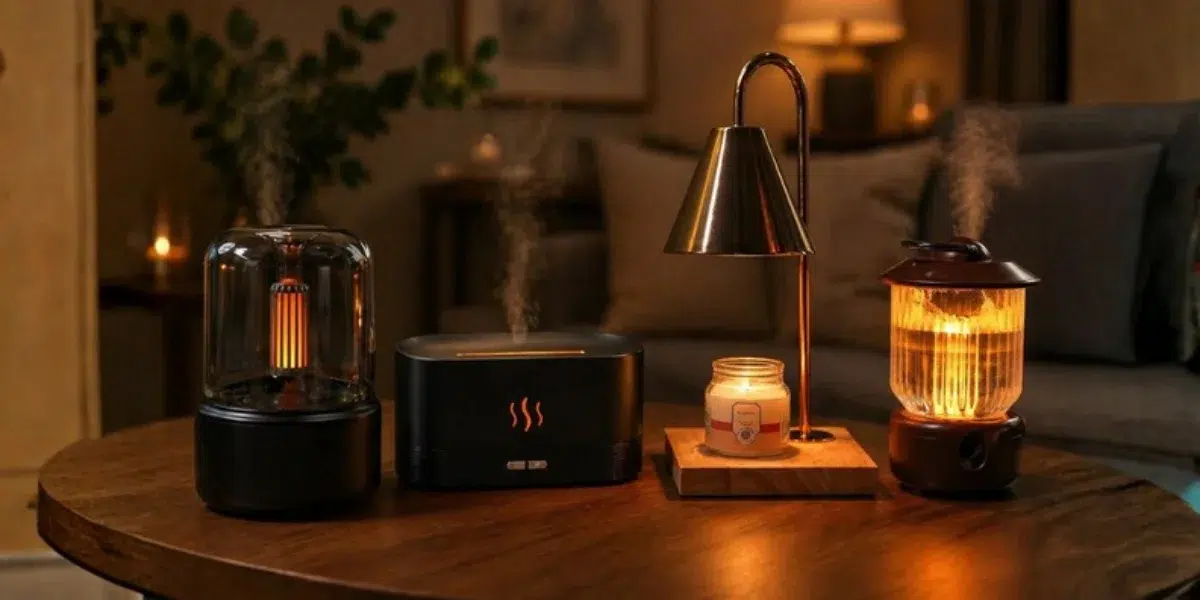
Essential oils vs fragrance oils for diffusers sounds like a question for a chemist, until the new diffuser is out of its box, the water tank is filled, and you are holding two little bottles that both say “lavender” on the label.
One smells like a field after rain, sharp and green. The other smells softer and rounder, a bit like a good lavender soap. Both will go into the same small machine on your bedside table. So which one do you pick?
The honest answer is that it depends on what you want from the room. Essential oils come straight from plants and smell like them. Fragrance oils are blended by perfumers to smell a certain way and to keep smelling that way. Neither one is a cheat, and neither one is magic.
At House of Aroma, both kinds sit side by side in the oils for diffuser range, so this guide is less about crowning a winner and more about matching the oil to your home, your diffuser and the people (and pets) who share the space with you.
If you want the bigger picture, with candles and soaps included, the older guide on fragrance oils vs essential oils covers all of that. This one stays on the diffuser.
1. Essential Oils vs Fragrance Oils for Diffusers: The Real Difference
Essential oils are distilled or pressed from plants, so they smell like the plant they came from. Fragrance oils are blends made by perfumers to create a set scent, using plant extracts, lab-made aroma ingredients, or both.
Essential oils, in plain words
Take lavender flowers, run steam through them, and collect the oily part that rises with it. That is an essential oil. Lemon and orange oils are usually pressed out of the peel instead. Either way, a tiny bottle holds the smell of a surprising amount of plant.
Because nature makes them, they shift a little from batch to batch. Think of Alphonso mangoes: same tree, slightly different taste every season. A good essential oil label gives you the plant’s full name so you know exactly what is inside.
Fragrance oils, in plain words
A fragrance oil is built, not picked. A perfumer chooses scent ingredients and mixes them until the bottle smells like, say, sandalwood with a little rose, or freshly washed cotton. This is how you get smells that no plant hands over in a bottle: clean linen, an ocean breeze, rain on hot ground.
Fragrance makers around the world follow safety standards from the fragrance industry’s global body, the International Fragrance Association (IFRA), which sets limits on how much of certain ingredients can go into a fragrance.
| What you are comparing | Essential oils | Fragrance oils |
|---|---|---|
| Where it comes from | Flowers, leaves, peel, wood, roots | A blend designed by a perfumer |
| What it smells like | The plant itself, often bright and green | Almost anything, from rose to fresh linen |
| Scent choice | Limited to plants that give an oil | Very wide |
| Same smell every bottle? | Can vary a little by harvest | Usually very steady |
| How it fills a room | Strong at first, often fades sooner | Often softer, often lasts longer |
| Feels right for | Bedrooms, desks, self-care routines | Living rooms, guests, a signature home scent |
One more thing before going further. Natural does not mean gentle, and lab-made does not mean harmful. Both are strong, concentrated liquids. Treat both with the same respect.
Are fragrance oils just fake essential oils?
No. They are a different product with a different job. Some fragrance blends even contain essential oils.
Do essential oils smell better than fragrance oils?
Not always. It comes down to your nose. Plenty of people love the clean, green smell of a pure plant oil, and plenty find it too sharp and prefer a rounder blend.
Can a fragrance oil contain essential oil?
Yes. Some blends use essential oils alongside other scent ingredients.
Why does the same essential oil smell slightly different in a new bottle?
Plants change with the weather, the soil and the harvest, so the oil can shift a little too. That is normal and not a sign of a bad bottle.
Is “100% pure” on a label enough to trust an essential oil?
It helps, but also look for the plant’s full botanical name, clear usage notes, safety lines and a dark glass bottle that keeps light out.
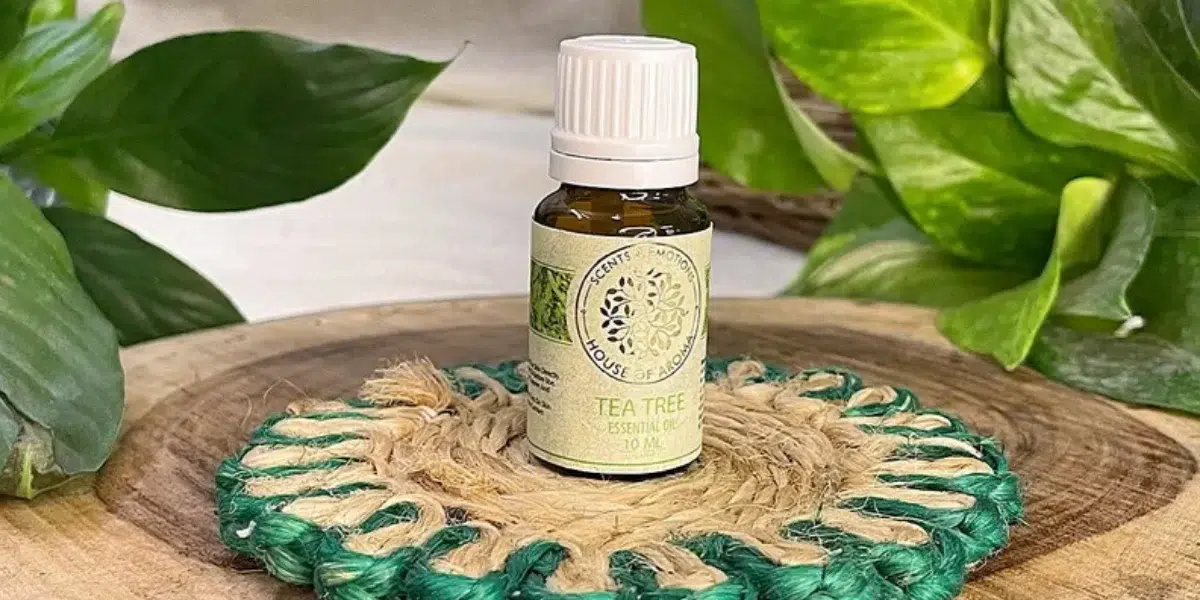
2. How Each Oil Behaves Inside a Diffuser
In an electric ultrasonic diffuser, both oils go into water and come out as a cool mist, so both work. What changes is how fast the scent fades and how the room smells an hour later.
Electric (ultrasonic) diffusers
Most electric diffusers use tiny, fast vibrations to break water and oil into a fine mist. No heat touches the oil, so what reaches your nose is close to what you smell when you open the bottle. This is the most common kind of diffuser in Indian homes, and it is happy with either type of oil as long as the label says it suits diffusers.
Lamp and warmer diffusers
These warm the oil gently from below. Heat makes light, fresh notes like lemon and mint rise quickly and disappear quickly. Woody and sweet scents hold up much better here, which is one reason fragrance blends with a warm base are popular in lamp diffusers.
Reed diffusers
Reeds are a different story. They need a ready-made liquid that can travel up the sticks. A neat essential oil, or a fragrance oil made for candles, is not made for that job, so stick to the refill meant for your reeds.
What actually happens in the room
Essential oils tend to open big. The first ten minutes of eucalyptus can feel like stepping out of the car in a hill station. Then the lighter parts of the oil fly off and the room goes quiet again.
Fragrance oils are often built like a perfume, with top, middle and base notes. So instead of dropping off, the scent changes slowly over the evening: fresh at first, then flowery, then warm and woody by the time the lights go off.
Same diffuser, same water, two very different evenings.
Can I use fragrance oil in an ultrasonic diffuser?
Yes, if the label says it is made for diffusers. Add a few drops to the water, never to an empty tank.
Can I use essential oil in an ultrasonic diffuser?
Yes. It is one of the most common ways people use essential oils at home.
Will either oil damage my diffuser?
Not usually. Trouble tends to come from too many drops, old oil left sitting in the tank, or skipping cleaning. Rinse and wipe the tank every few days and it will last.
Can I put candle fragrance oil in my diffuser?
Only if the bottle says it suits diffusers as well. Some oils are made for wax and nothing else.
Why does my diffuser smell strong at first and then not at all?
Your nose gets used to a smell quite quickly. Step out of the room for a few minutes and walk back in. Most of the time the scent is still there; you just stopped noticing it.
3. Scent Choice, Strength and How Long It Lasts
Fragrance oils win on choice and staying power. Essential oils win if you want the pure smell of a plant. How strong the room smells depends more on the oil and the number of drops than on which type you chose.
Choice
Essential oils give you what plants can give: lavender, eucalyptus, peppermint, lemongrass, tea tree, rosemary, ylang, vetiver, frankincense, patchouli. That is a lovely list. But no plant gives you “fresh linen” or “monsoon evening”.
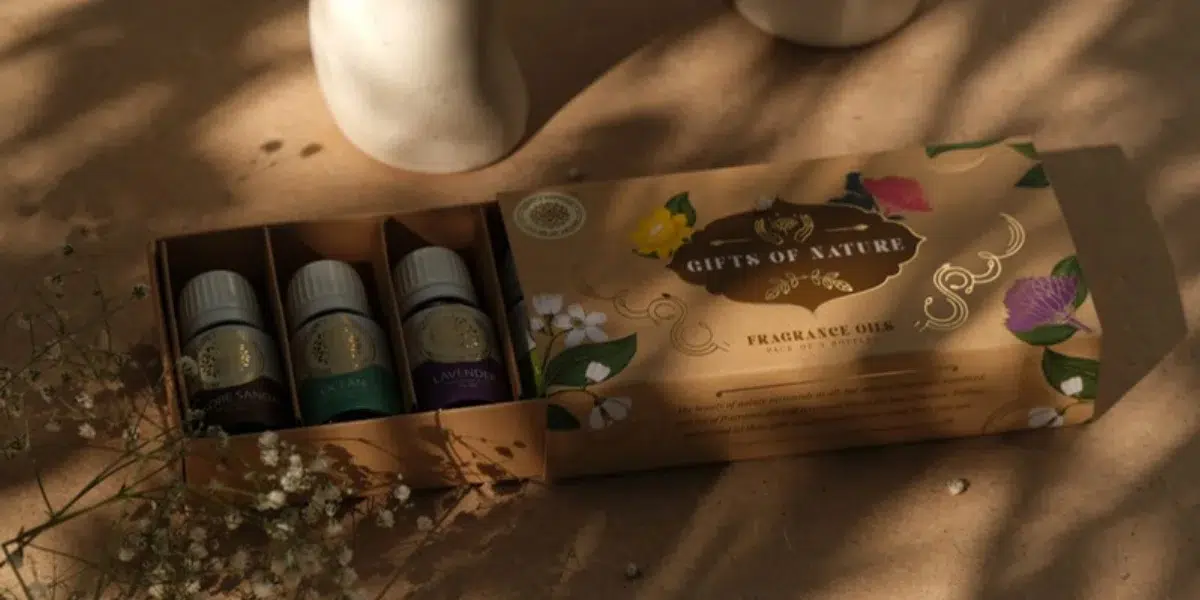
That gap is exactly where fragrance oils come in. If you are not sure where your nose lands, a set of five fragrance oils is an easy way to try a few scents before settling on one.
Strength
More drops is not the fix for a weak smell. Start small, with a few drops in a full tank, and add one more at a time over a few days. Each House of Aroma product page gives a suggested amount for that oil, so check the page for the bottle you bought.
A smaller room needs fewer drops than you think. A 10 x 10 bedroom with the AC on and windows shut fills up much faster than an open living room with the balcony door open.
How long it lasts
Light citrus and mint notes fade fastest. Woody and resin scents linger. Fragrance oils with a base note built in often keep the room smelling nice for a while after the diffuser switches off.
- Short and bright: lemon, mint, lemongrass
- Somewhere in the middle: lavender, eucalyptus, rosemary
- Long and slow: sandalwood, patchouli, vetiver, oud-style blends
Settled on fragrance oils already? The guide on choosing fragrance oils for your home diffuser goes a step further.
Which lasts longer in a diffuser, essential oil or fragrance oil?
Often the fragrance oil, because many are blended to last. But a deep essential oil like patchouli can easily outlast a light, fresh fragrance.
How many drops of oil should I put in my diffuser?
Start with a few and follow the product page for your oil. You can always add a drop. You can’t take one out.
Can I mix essential oils and fragrance oils in one diffuser?
Yes, many people do. Pick a pair that makes sense together, like lavender with a soft woody blend, and keep the total number of drops low.
Why can’t I find essential oils that smell like fresh linen or the ocean?
Some scents don’t come from a plant that gives an oil easily, and some don’t come from a plant at all. Fragrance oils fill that space.
Do essential oils lose their smell over time?
Yes, slowly. Air, heat and sunlight age them, so keep the cap tight and the bottle in a cool, dark cupboard.

4. Which Oil Suits Which Room?
Use essential oils where you want a calm, simple plant smell, like the bedroom or a work desk. Use fragrance oils where you want a full, lasting scent, like the living room before guests arrive.
Bedroom: An AC bedroom with the windows shut fills up fast, so one gentle oil is plenty. Many people find lavender essential oil a calming last smell of the day. Run the diffuser for a while before bed and let the timer switch it off.
Living room: This is where fragrance oils shine. A Diwali open house, cousins dropping in, the dhoop from the evening pooja still hanging in the air: you want something that fills the space and holds for hours. Sandalwood, amber and rose blends sit well here.
Work-from-home desk: Keep it light. Peppermint or rosemary essential oil, a few drops, short bursts. A heavy perfume blend next to your laptop gets tiring by lunch.
Dining area after cooking: Lemongrass and citrus feel fresh after a heavy tadka. Open a window first, then let the diffuser do the rest.
Monsoon months: Damp walls and clothes that refuse to dry give that musty smell every Mumbai flat knows. Clean, sharp scents like eucalyptus or tea tree feel good in the day, and a warm woody fragrance blend makes the evenings cosy. When the rain stops, open the windows. No oil beats fresh air.
Pick essential oils when
- you want the smell of a real plant
- the room is small or you sit close to the diffuser
- you like changing scents with your mood
- the oil is part of a self-care routine
Pick fragrance oils when
- you want one signature scent for the whole home
- the room is big or guests are on the way
- you want scents like fresh linen, oud or florals
- you want the same smell every time you reorder
Which oil is best for a bedroom diffuser?
Soft essential oils like lavender are a popular pick. Keep the drops low and use the timer.
What scent works best in a living room diffuser?
Fuller fragrance blends such as sandalwood, amber or rose hold up well in a bigger space.
Can I use the same oil in every room?
You can. Some people love one signature scent across the whole home. Just use fewer drops in the smaller rooms.
Which diffuser oil feels good during the monsoon?
Fresh, clean scents like eucalyptus or lemongrass are a nice change when the flat smells damp. Keep the windows open whenever the rain lets you.
Is it okay to run a diffuser in a closed AC room?
Yes, for short spells. Use fewer drops than usual, set a timer and let some fresh air in now and then.

5. How to Use Essential Oils vs Fragrance Oils for Diffusers
The steps are almost the same for both: water to the line, a few drops of oil, lid on, switch on. The difference is in how many drops you use and how long you run it.
- Place the diffuser on a flat, steady surface, away from curtains, books and the TV.
- Fill it with clean, room-temperature water up to the line marked in the tank. Don’t overfill.
- Add a few drops of oil. Start low: essential oils can feel sharp, and fragrance oils can feel heavy.
- Close the lid, switch it on, and pick the mist setting and the timer.
- When you are done, empty the tank and wipe it dry. Every few days, clean it properly as the manual says.
Lamp and ceramic diffusers work differently. A small bowl of water and a few drops of oil sit over gentle heat. Follow the instructions that come with your lamp, and never leave a flame burning in an empty room.
If you love the look of a candle but don’t want a flame, the Candlelight Style Electric Diffuser is a flame-free option for the bedside or the coffee table.
Switching between oils
Clean in between. Leftover sandalwood plus fresh lemongrass smells muddy, not clever. A quick rinse and a wipe with a soft cloth is enough most days.
How long to run it
Short sessions usually beat all-day mist. Run the diffuser for a while, switch it off, come back to it later. Your nose stays sharper, you notice the scent again, and the bottle lasts longer.
Should I add the oil before or after the water?
Water first, then oil. The drops sit on top and spread into the mist more evenly.
Can I use tap water in my diffuser?
Many people do. If your water is hard and leaves white marks, filtered water keeps the tank cleaner. Your diffuser’s manual has the final word.
How long should I run my diffuser each time?
Short spells suit most homes. Use the timer and give the room a break between sessions.
Do I need to clean the diffuser when I change oils?
Yes. A quick rinse and wipe stops the old and new scents from mixing into something odd.
Can I leave my diffuser on overnight?
Only if your model has an automatic shut-off and the manual says it is fine. A timer is the safer habit.
6. Diffuser Oil Safety With Children, Pets and Pregnancy
Both oils are concentrated, so keep the bottles out of reach, never swallow them, and never put either on skin without checking the label and diluting first. Gentle diffusing in an airy room is how most families use them.
Skin: Diffuser oils belong in the diffuser. If an essential oil’s product page says it can be used on skin, it will also tell you to dilute it in a carrier oil and do a patch test first. Fragrance oils for diffusers are not for skin, and no oil should go near the eyes.
Children: Little hands love little bottles. Keep them on a high shelf with the caps tight. Run the diffuser where children can’t knock it over, and in a room they can walk out of.
Pregnancy and health: If you are pregnant, breastfeeding, or have asthma or another health condition, ask your doctor before using a diffuser regularly, especially with essential oils.
Pets: Cats, dogs and especially birds have sensitive noses and lungs. The ASPCA says diffusing for a short time in a space pets can’t reach is unlikely to be a problem, but it suggests avoiding diffusers in homes with birds. Keep the diffuser where tails can’t swipe it, and always give pets a way out of the room.
One honest note: no diffuser oil treats or cures anything. Many people simply find certain scents relaxing or cheering, and that is reason enough to enjoy them.
- Keep bottles away from children and pets
- Never swallow any oil
- Dilute before any skin use, and patch test first
- Keep oils away from eyes
- Air the room out regularly
- Switch off if anyone gets a headache or feels unwell
Are fragrance oils safe to diffuse at home?
Yes, when they are made for diffusers and used in small amounts in an airy room. Follow the label on your bottle.
Are essential oils safe to diffuse around babies?
Be extra careful. Keep the diffuser out of the baby’s room and ask your paediatrician before using one nearby.
Can I diffuse oils if I have a cat or a dog?
Short sessions in a room they can leave are usually fine for cats and dogs. Birds are much more sensitive. If you’re unsure, ask your vet.
Can I put diffuser oil on my skin?
Not fragrance oil. Essential oil only if the product page says it suits skin, and always diluted, with a patch test first.
What should I do if a child swallows diffuser oil?
Don’t wait to see what happens. Call your doctor or go to the nearest hospital straight away, and take the bottle with you.
7. Common Mistakes With Diffuser Oils
Most diffuser trouble comes from three things: too much oil, the wrong oil for the diffuser type, or a tank that hasn’t been cleaned.
Too many drops: a headache is not a stronger scent. If the room smells harsh, halve the drops.
The wrong oil: candle-only fragrance oils and reed refills don’t belong in an ultrasonic tank. Read the label before you pour.
Skipping the clean: old oil turns sticky and sour, and the next scent picks up that smell.
Running it all day: your nose stops noticing, so you keep adding drops, and the room ends up heavy.
Buying on the word “natural” alone: look for the plant name, how to use it and the safety lines. A clear label tells you more than a pretty one.
Leaving bottles in sunlight: a window sill in May will age an oil fast. A cupboard is better.
Why does my diffuser smell sour or burnt?
Usually old oil in a tank that needs a proper clean. Empty it, wash it the way the manual says and start fresh.
Can I use my reed diffuser refill in an electric diffuser?
Usually not. Reed liquids are made to climb sticks, not to go into a misting tank. Use oils made for your electric diffuser.
Is a stronger smell a sign of a better oil?
No. A good oil smells clear and pleasant at a few drops. If it feels harsh, use less.
Why has my diffuser stopped misting?
Low water, a dirty plate or too much oil are the usual reasons. Clean it, refill to the line and try again.
Should I keep diffuser oils in the fridge?
There is no need. A cool, dark cupboard with the cap tight works well.
8. Why Choose House of Aroma for Diffuser Oils?
House of Aroma is an aroma company based in Mumbai that offers both essential oils and fragrance oils, so you don’t have to pick a side. You can keep a plant oil for the bedroom and a fuller blend for the living room, from one place.
Each product page explains what the oil is, how to use it and what to be careful about, which makes it simpler to choose the right bottle for your diffuser and your home.
Find a fragrance that fits:
- Pure plant scents: essential oils
- Rich, lasting home scents: fragrance oils
- A few to try at once: the set of five essential oils or the set of five fragrance oils
- Something to put them in: electric diffusers
Conclusion: Pick the Oil That Fits the Room
Essential oils give you a plant in a bottle. Fragrance oils give you a scent someone designed. Both work in a diffuser, and both deserve the same care.
If you want something simple and green for the bedroom or a quiet desk, start with an essential oil. If you want the whole flat to smell welcoming when the doorbell rings, a fragrance oil will usually do it better, and for longer.
Whichever you choose, use fewer drops than you think, clean the tank, and keep the bottles away from small hands and curious paws.
The best diffuser oil is simply the one you look forward to smelling when you walk in the door.
Which is better for a diffuser, essential oil or fragrance oil?
Neither wins every time. Essential oils suit people who want a pure plant smell. Fragrance oils suit people who want more scent choice and a room that stays scented longer.
Is fragrance oil cheaper than essential oil?
It varies a lot by scent and quality. Check each product page for current prices.
Can I use my perfume in a diffuser?
No. Body perfume is made for skin and isn’t meant for a diffuser tank. Use oils labelled for diffusers.
Can I make my own diffuser blend?
Yes. Pick two or three oils that go well together, like lavender and a soft woody blend, and test with a few drops before you make a bigger mix.
Do fragrance oils have any wellness benefits?
They are made for scent. Many people find a favourite smell lifts their mood after a long day, but a fragrance oil is not a therapy.
Why do some people get headaches from diffusers?
Often it is simply too much oil in too small a room. Try fewer drops, shorter runs and an open window. If the headaches carry on, stop using it.
Does House of Aroma sell both essential oils and fragrance oils for diffusers?
Yes. Both are in the oils for diffuser range, along with gift sets if you want to try a few scents first.
How do I know if a House of Aroma oil suits my diffuser?
Open the product page for that oil. It explains how to use it and which diffusers it works with.