A diffuser is one of the simplest ways to add a pleasant fragrance to a room, but the quality of the fragrance oil plays a major role in how well the diffuser performs. The best fragrance oils for diffusers are not simply the strongest-smelling oils. They should be compatible with the type of diffuser, provide good scent throw, blend properly with the appropriate base, and have usage and safety information suitable for the intended application.
For reed diffusers in particular, fragrance performance depends on several factors, including the fragrance composition, diffuser base, viscosity, reeds, fragrance concentration, room size, airflow, and temperature. Commercial reed diffuser formulations commonly use fragrance loads within a broad range, often around 15–30%, although the appropriate level depends on the specific fragrance and its permitted application rate.
Whether you prefer floral, woody, citrus, fruity, fresh, gourmand, or oriental aromas, choosing the right fragrance oil for diffusers can help create a consistent and long-lasting scent experience.
What Are Fragrance Oils for Diffusers?
Fragrance oils are concentrated aromatic blends formulated to provide a specific scent. They can contain a combination of aroma compounds and, depending on the formulation, other ingredients designed to create a particular fragrance profile.
However, not every fragrance oil is automatically suitable for every type of diffuser.
A fragrance oil intended for candles, cosmetics, soap, or perfume may have different formulation requirements and permitted usage levels. For reed diffusers, the fragrance needs to work effectively with a diffuser base and travel through the reeds before evaporating into the surrounding air.
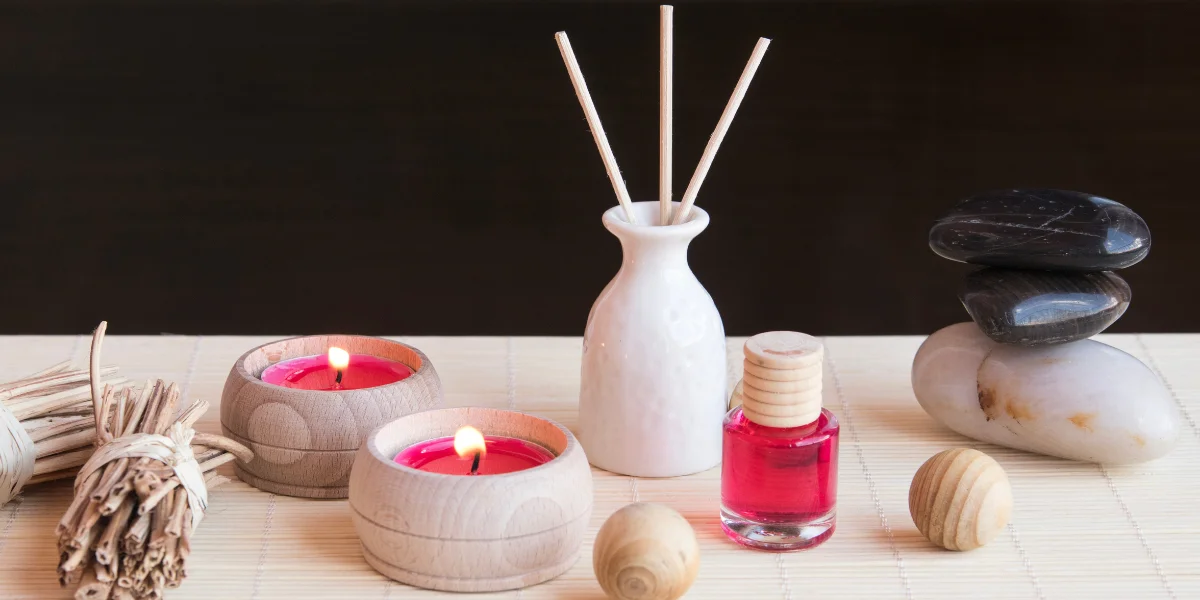
A properly formulated reed diffuser typically combines:
- Fragrance oil
- A suitable diffuser base
- Appropriate reeds
- A compatible diffuser vessel
The base is particularly important because it helps control viscosity, wicking and evaporation.
What are fragrance oils for diffusers?
Fragrance oils for diffusers are concentrated aromatic formulations designed to provide fragrance when used with a compatible diffuser system.
Can any fragrance oil be used in a diffuser?
No. The fragrance should be specifically suitable for the intended diffuser application and used according to the supplier’s recommended usage level.
Are fragrance oils the same as essential oils?
No. Fragrance oils are formulated fragrance blends, while essential oils are naturally derived aromatic extracts obtained from plants.
Why are fragrance oils used in reed diffusers?
Fragrance oils can provide a wide variety of scent profiles and can be formulated for consistent fragrance performance in home-fragrance products.
What makes a fragrance oil suitable for reed diffusers?
It should be compatible with the diffuser base, wick effectively through the reeds, provide suitable scent throw and have appropriate safety and usage documentation.
What Are the Best Types of Fragrance Oils for Diffusers?
The best fragrance oils for diffusers depend largely on the atmosphere you want to create. Different fragrance families behave differently and suit different rooms and preferences.
Here are some popular fragrance categories for diffusers.
1. Floral Fragrance Oils
Floral fragrances are among the most popular choices for home fragrance. Common options include:
- Rose
- Jasmine
- Lavender
- Gardenia
- Tuberose
- Ylang-ylang
- Peony
Floral fragrance oils can create a soft, elegant and welcoming atmosphere.
Best for: Bedrooms, living rooms, dressing areas and relaxation spaces.
2. Citrus Fragrance Oils
Citrus fragrances provide bright and refreshing aromatic profiles.
Popular choices include:
- Lemon
- Orange
- Bergamot
- Grapefruit
- Lime
- Mandarin
Best for: Kitchens, entryways, workspaces and living areas.
3. Woody Fragrance Oils
Woody fragrances can create a sophisticated and warm environment.
Popular options include:
- Sandalwood
- Cedarwood
- Oud
- Patchouli
- Vetiver
- Amber woods
Best for: Living rooms, offices, lounges and premium hospitality spaces.
4. Fresh and Clean Fragrance Oils
Fresh fragrance oils are useful when the goal is to create a clean and airy atmosphere.
Popular profiles include:
- Linen
- Fresh cotton
- Ocean breeze
- Rain
- Green tea
- Eucalyptus-inspired accords
Best for: Bathrooms, bedrooms, offices and common areas.
5. Fruity Fragrance Oils
Fruity scents can add a vibrant and playful character to interiors.
Popular choices include:
- Strawberry
- Apple
- Peach
- Berry
- Mango
- Watermelon
Best for: Living rooms, children’s common areas, retail environments and casual spaces.
6. Gourmand Fragrance Oils
Gourmand fragrances recreate sweet or edible-inspired aromas.
Examples include:
- Vanilla
- Caramel
- Chocolate
- Coffee
- Coconut
- Almond
Best for: Living rooms, cafés, lounges and cosy interiors.
Which fragrance oil is best for a reed diffuser?
The best fragrance oil is one specifically compatible with reed diffuser formulations and suited to the desired scent intensity and room environment.
What are the most popular fragrance oils for home diffusers?
Popular choices include lavender, vanilla, rose, sandalwood, citrus, jasmine, oud, fresh linen and fruity fragrance blends.
Which fragrance oils are best for living rooms?
Woody, floral, citrus, fresh and sophisticated fragrance blends can work well in living rooms depending on personal preference.
Which fragrance oils are suitable for bedrooms?
Soft floral, fresh, woody and calming scent profiles are commonly chosen for bedrooms.
Which fragrance oils create a fresh-smelling room?
Citrus, fresh linen, green, aquatic and clean fragrance profiles are commonly selected for a fresh room atmosphere.
How Do You Choose the Best Fragrance Oil for a Diffuser?
Choosing the right fragrance oil involves more than selecting a scent you like. Several technical factors influence diffuser performance.
1Check Diffuser Compatibility
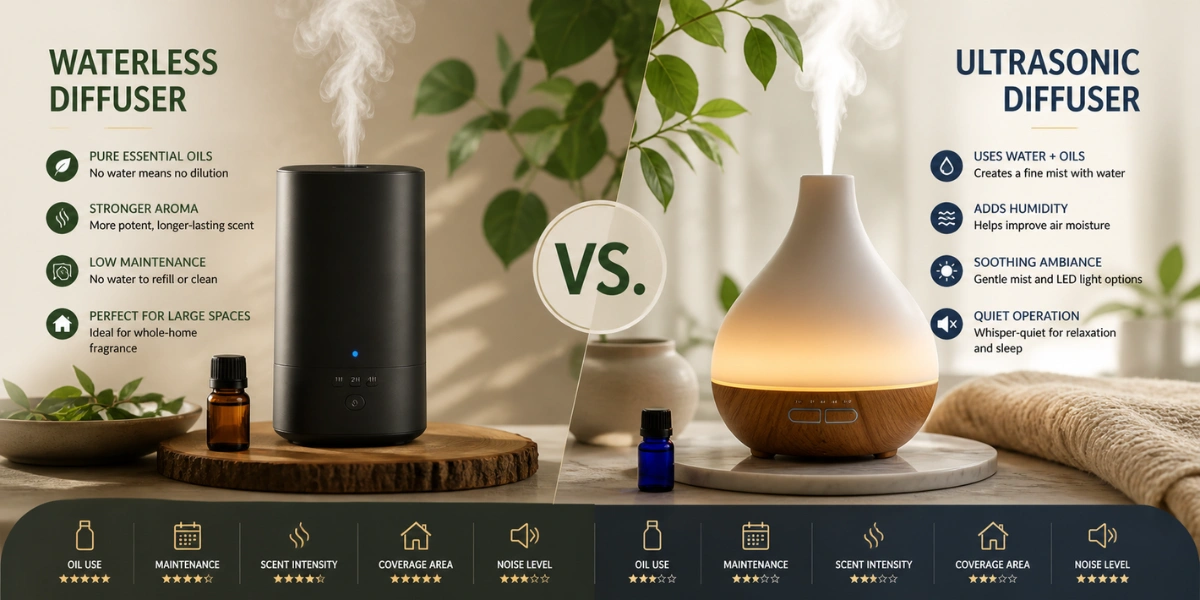
First, determine what type of diffuser you are using. A fragrance suitable for a reed diffuser may not be suitable for an ultrasonic water diffuser. Reed diffusers use a liquid fragrance-and-base mixture that travels through reeds, while ultrasonic diffusers generally use water and require formulations appropriate for that device. Therefore, always check the manufacturer’s instructions before using a fragrance oil.
2Consider Scent Throw
Scent throw refers to how effectively fragrance spreads throughout an area. A fragrance with good performance should provide noticeable aroma without requiring excessive fragrance concentration. However, increasing the fragrance percentage does not automatically guarantee better diffusion. Too much fragrance can affect viscosity, compatibility and reed performance.
3Check the Recommended Usage Level
This is one of the most important considerations when selecting fragrance oils. Fragrance suppliers may provide application-specific usage recommendations. For reed diffusers, commonly cited working ranges can fall around 15–30%, but the correct percentage must be determined by the specific fragrance, base and applicable safety documentation. Never assume that a fragrance’s candle usage rate can simply be transferred to a diffuser.
4Check IFRA Information
IFRA documentation provides information about fragrance use in different applications. A fragrance oil may have a different maximum recommended level depending on its intended product category. Some fragrance oils may therefore be excellent for candles but unsuitable for use at the concentration required for a reed diffuser.
5Evaluate the Fragrance Profile
Consider where the diffuser will be used, because room size, airflow and purpose all influence which fragrance family performs best.
| Space | Suitable fragrance families |
|---|---|
| Bedroom | Floral, soft woody, fresh |
| Living room | Woody, floral, citrus, amber |
| Bathroom | Fresh, aquatic, citrus |
| Kitchen | Citrus, herbal, fresh |
| Office | Green, citrus, woody |
| Retail store | Signature, woody, floral, premium |
| Hotel lobby | Woody, amber, floral, sophisticated |
How do I choose fragrance oil for a reed diffuser?
Choose an oil specifically suitable for reed diffusers, check its recommended usage level and verify compatibility with your diffuser base.
Why is fragrance compatibility important for diffusers?
Compatibility affects how well the fragrance mixes with the base, travels through the reeds and releases into the surrounding environment.
What should I check before buying fragrance oil for a diffuser?
Check the intended application, usage recommendations, fragrance profile, safety documentation and compatibility with your diffuser system.
Does a stronger fragrance oil always work better in a diffuser?
No. Fragrance performance depends on the oil, base, concentration, reeds, room conditions and formulation balance.
Should fragrance oil be selected based on the room?
Yes. Room size, airflow, purpose and desired atmosphere can all influence which fragrance profile works best.
What Are the Best Fragrance Oils for Reed Diffusers?
For reed diffusers, the best fragrance oils are those that provide good scent performance while remaining compatible with the chosen diffuser base.
Some fragrance categories are particularly popular.
Lavender
Lavender provides a soft floral-herbal profile and is commonly used in bedrooms and relaxation-focused spaces.
Vanilla
Vanilla offers a warm, creamy and sweet aroma. It is particularly popular for creating cosy interiors.
Sandalwood
Sandalwood provides a warm, woody character and is frequently associated with premium and sophisticated fragrance compositions.
Oud-based fragrance oils can create a rich and luxurious atmosphere and are often used in premium home-fragrance products.
Jasmine
Jasmine offers an expressive floral profile that can work well in living rooms, bedrooms and hospitality spaces.
Rose
Rose provides a recognizable floral aroma and can be used in elegant residential and hospitality environments.
Bergamot
Bergamot combines citrus freshness with a slightly floral character, making it versatile for living areas and workspaces.
Citrus Blends
Lemon, orange, grapefruit and mandarin combinations can provide bright and refreshing scent profiles.
Fresh Linen
Fresh linen and clean cotton-inspired fragrances are popular for creating a clean and airy indoor atmosphere.
Amber
Amber fragrances often combine warm, resinous, sweet and woody notes, making them suitable for sophisticated interior environments.
What is the most popular fragrance for reed diffusers?
Popular reed diffuser fragrances include lavender, vanilla, sandalwood, jasmine, rose, citrus, fresh linen, amber and oud.
Is lavender a good fragrance oil for reed diffusers?
Lavender can be a good choice when the fragrance oil is formulated and approved for reed diffuser applications.
Is vanilla fragrance oil suitable for reed diffusers?
Vanilla fragrance oil can be used in reed diffusers when the specific fragrance is compatible with the diffuser base and its recommended application rate.
Are citrus fragrance oils good for reed diffusers?
Citrus fragrance oils can provide bright and refreshing scent profiles, provided the specific formulation is suitable for reed diffuser use.
Is oud fragrance oil suitable for home diffusers?
Oud-inspired fragrance oils can be used for home diffusers when formulated for the intended diffuser application.
Are Fragrance Oils or Essential Oils Better for Diffusers?
This depends on the type of diffuser and the desired fragrance experience.
Fragrance oils offer a broad range of scent possibilities, including fragrance profiles that may be difficult to recreate using essential oils alone.
Essential oils are derived from botanical sources and provide naturally occurring aromatic profiles.
For ultrasonic water diffusers, you should follow the diffuser manufacturer’s instructions and use products specifically appropriate for that device. Some fragrance oils are not designed to disperse in water and may separate or potentially affect device performance.
Are fragrance oils better than essential oils for diffusers?
Neither is universally better. The appropriate choice depends on the diffuser type, formulation, desired fragrance and manufacturer’s instructions.
Can fragrance oils be used in an ultrasonic diffuser?
Only if the fragrance oil is specifically formulated or approved for that type of water-based diffuser.
Can essential oils be used in reed diffusers?
Some essential oils can be incorporated into reed diffuser formulations, but they still need to be compatible with the chosen base and formulation.
Do fragrance oils last longer than essential oils?
Longevity depends on the specific formulation, volatility, base, concentration and diffuser system rather than simply whether the material is a fragrance oil or essential oil.
Are fragrance oils natural?
Not necessarily. Fragrance oils can contain naturally derived ingredients, synthetic aroma compounds or a combination of both, depending on their formulation.
What Makes a Fragrance Oil Last Longer in a Diffuser?
The longevity of a diffuser depends on several factors rather than the fragrance oil alone.
1Diffuser Base
The base influences evaporation and wicking. A properly formulated diffuser base helps transport fragrance through the reeds at a controlled rate.
2Fragrance Concentration
Higher fragrance concentration does not automatically mean longer-lasting performance. The formulation needs to balance fragrance concentration with the characteristics of the base and reeds.
3Reed Type
Reeds act as the delivery mechanism. Their material, diameter and number influence how quickly liquid travels upward and evaporates.
4Room Temperature
Higher temperatures can increase evaporation. A diffuser placed in a warm, sunny location may therefore consume liquid more quickly.
5Airflow
Air conditioning, fans, open windows and ventilation can affect how fragrance spreads and how quickly the diffuser liquid evaporates.
6Vessel Design
A narrow-necked diffuser bottle can reduce the exposed liquid surface area and influence evaporation.
How long should a reed diffuser fragrance last?
The lifespan varies according to bottle size, formulation, fragrance concentration, reeds, room temperature and airflow.
Does fragrance concentration affect diffuser longevity?
Yes, concentration can influence scent intensity and consumption, but increasing the fragrance level does not necessarily make a diffuser last longer.
Do reeds affect how long a diffuser lasts?
Yes. The number, material and size of reeds influence how quickly the diffuser liquid travels upward and evaporates.
Does room temperature affect diffuser oil?
Yes. Warmer conditions can increase evaporation and may cause the diffuser to be consumed faster.
Where should I place a reed diffuser for better performance?
Place it on a stable surface with suitable airflow while avoiding direct sunlight, excessive heat and areas where the liquid could damage delicate surfaces.
What Fragrance Oil Percentage Should Be Used in a Reed Diffuser?
There is no single percentage that works for every fragrance oil.
Commercial guidance commonly places reed diffuser fragrance loads somewhere in the 15–30% range, while some suppliers recommend approximately 20–25% as a starting point. However, the specific fragrance’s documentation should always take priority.
For example, if a supplier recommends a 25% fragrance load for a 100 g finished diffuser:
- Fragrance oil: 25 g
- Diffuser base: 75 g
- Total: 100 g
It is better to measure by weight when formulating because fragrance oils and bases can have different densities.
What percentage of fragrance oil is used in reed diffusers?
A commonly used working range is around 15–30%, but the correct level depends on the fragrance, diffuser base and applicable safety documentation.
Is 25% fragrance oil good for a reed diffuser?
25% can be a common starting point for some reed diffuser formulations, but the specific fragrance manufacturer’s recommended limit should always be checked first.
Can I use 50% fragrance oil in a reed diffuser?
Do not assume that a higher concentration is appropriate. Follow the specific fragrance and diffuser base documentation and conduct compatibility testing.
Should diffuser fragrance oil be measured by weight or volume?
Weight is generally preferred for formulation accuracy because different ingredients can have different densities.
What happens if a diffuser contains too much fragrance oil?
An excessive fragrance concentration may affect viscosity, compatibility, wicking, evaporation and overall diffuser performance.
How Do You Get Better Scent Throw From Fragrance Oils in a Diffuser?
If your diffuser smells weak, changing the fragrance oil is not always the first solution.
Check the entire system.
Use the Correct Diffuser Base
The base should be designed for the intended application and compatible with the fragrance.
Use Suitable Reeds
Rattan or purpose-designed fiber reeds can provide different wicking characteristics. The reed material and dimensions influence fragrance release.
Increase Reed Count Carefully
Adding more reeds can increase the exposed surface area and fragrance release. However, this can also increase liquid consumption.
Check the Room
Large rooms, high ceilings, strong ventilation and air conditioning can make a fragrance seem weaker.
Test the Fragrance
Different fragrances have different volatility and diffusion characteristics. A fragrance that performs strongly in one formulation may perform differently in another.
Why is my reed diffuser not smelling strong?
Possible causes include an unsuitable fragrance, incompatible base, insufficient fragrance concentration, unsuitable reeds, poor airflow or a room that is too large for the diffuser.
Does adding more reeds make a diffuser smell stronger?
Adding reeds can increase fragrance release because more surface area is exposed, but it can also make the liquid evaporate faster.
Does turning reeds improve fragrance diffusion?
Turning or flipping reeds can temporarily expose fragrance-saturated ends to the air and increase scent release, but it can also accelerate consumption.
Can changing the diffuser base improve scent throw?
Yes. The base influences viscosity, wicking and evaporation, so choosing a compatible diffuser base can improve performance.
Does room size affect diffuser scent throw?
Yes. A diffuser designed for a small room may not provide the same perceived intensity in a large, open or highly ventilated space.
What Should You Look for When Buying Fragrance Oils for Diffusers?
Whether you are a consumer, home-fragrance maker or fragrance brand, look beyond the fragrance name.
Look for:
- Diffuser compatibility – confirm that the fragrance is suitable for your intended diffuser application.
- Usage recommendations – check the recommended percentage and maximum permitted usage.
- IFRA documentation – look for application-specific fragrance safety information.
- SDS documentation – Safety Data Sheets provide important information about handling, storage and hazards.
- Fragrance description – look for information about top, middle and base notes where available.
- Consistency – for commercial manufacturing, consistent fragrance performance between batches is important.
- Base compatibility – test the fragrance with your selected diffuser base before producing large quantities.
- Stability – check whether the finished formulation remains clear and stable over time.
What should I check when buying fragrance oils for reed diffusers?
Check diffuser compatibility, recommended usage level, IFRA information, SDS documentation, fragrance profile and base compatibility.
Why is IFRA documentation important when buying fragrance oil?
It provides application-specific information about recommended or maximum fragrance usage levels.
Should fragrance oils have an SDS?
For commercial handling and formulation, an SDS can provide important safety and hazard information.
How do I know if fragrance oil is compatible with my diffuser base?
Check supplier recommendations and conduct a small compatibility test before producing or using a larger batch.
Is fragrance strength the most important factor when buying diffuser oil?
No. Compatibility, safety documentation, formulation performance, stability and scent profile are also important.
Best Fragrance Oils for Diffusers: Quick Comparison
| Fragrance Type | Scent Character | Suitable Spaces |
|---|---|---|
| Lavender | Floral, herbal, soft | Bedroom, relaxation areas |
| Vanilla | Sweet, creamy, warm | Bedroom, living room |
| Sandalwood | Woody, warm, rich | Living room, office |
| Oud | Deep, woody, luxurious | Living room, lobby |
| Jasmine | Rich, floral | Bedroom, living room |
| Rose | Floral, elegant | Bedroom, hospitality |
| Bergamot | Citrus, fresh, slightly floral | Office, living room |
| Lemon | Bright, citrusy | Kitchen, bathroom |
| Fresh Linen | Clean, airy | Bedroom, bathroom |
| Amber | Warm, sweet, resinous | Living room, lounge |
| Green Tea | Fresh, green, subtle | Office, bedroom |
| Coconut | Creamy, tropical | Living room, leisure spaces |
Final Thoughts: Choosing the Best Fragrance Oils for Diffusers
The best fragrance oils for diffusers are not necessarily the strongest fragrances available. A good diffuser fragrance should be selected according to the diffuser type, fragrance compatibility, scent profile, diffuser base, recommended concentration and safety documentation.
For reed diffusers, popular fragrance families include floral, citrus, woody, fresh, fruity, gourmand and amber fragrances. However, the fragrance itself is only one part of the final product. The base, reeds, concentration, vessel and environmental conditions all contribute to the final scent experience.
For commercial or DIY formulation, always check the supplier’s application-specific recommendations rather than applying a generic fragrance percentage. Different oils can have different permitted usage levels, and the manufacturer’s documentation should take priority.
What is the best fragrance oil for a diffuser?
The best fragrance oil is one that is specifically suitable for the type of diffuser being used, provides the desired scent profile and can be safely used at an appropriate concentration.
Which fragrance lasts longest in a diffuser?
Longevity depends on the fragrance formulation, volatility, diffuser base, concentration, reeds, temperature and airflow rather than simply the fragrance family.
What fragrance oils are best for home diffusers?
Popular choices include lavender, vanilla, sandalwood, oud, jasmine, rose, bergamot, citrus, fresh linen and amber.
Can fragrance oils be used in all diffusers?
No. Reed diffusers, ultrasonic diffusers and nebulizing diffusers use different mechanisms, so the fragrance should be appropriate for the specific device.
How much fragrance oil should I put in a reed diffuser?
Many formulations use approximately 15–30% fragrance oil, but the correct percentage must be based on the specific fragrance, diffuser base and applicable usage documentation.
Are fragrance oils safe for diffusers?
Safety depends on the specific formulation, concentration, diffuser type and instructions. Always follow the manufacturer’s application and handling guidance.
Can I mix two fragrance oils in a diffuser?
Yes, fragrance oils can sometimes be blended to create custom scent profiles, but the resulting blend should be tested for compatibility, stability and appropriate usage levels.
Why does my diffuser fragrance disappear quickly?
Fast consumption can be influenced by high evaporation, warm temperatures, airflow, the diffuser base, reed count and formulation.
Can I use candle fragrance oil in a reed diffuser?
Not automatically. A fragrance designed for candles should only be used in a reed diffuser if the supplier confirms that it is suitable for that application.
What is the difference between diffuser oil and fragrance oil?
Fragrance oil is the aromatic concentrate, while diffuser oil can refer to a finished mixture containing fragrance and a suitable carrier/base designed for diffusion.